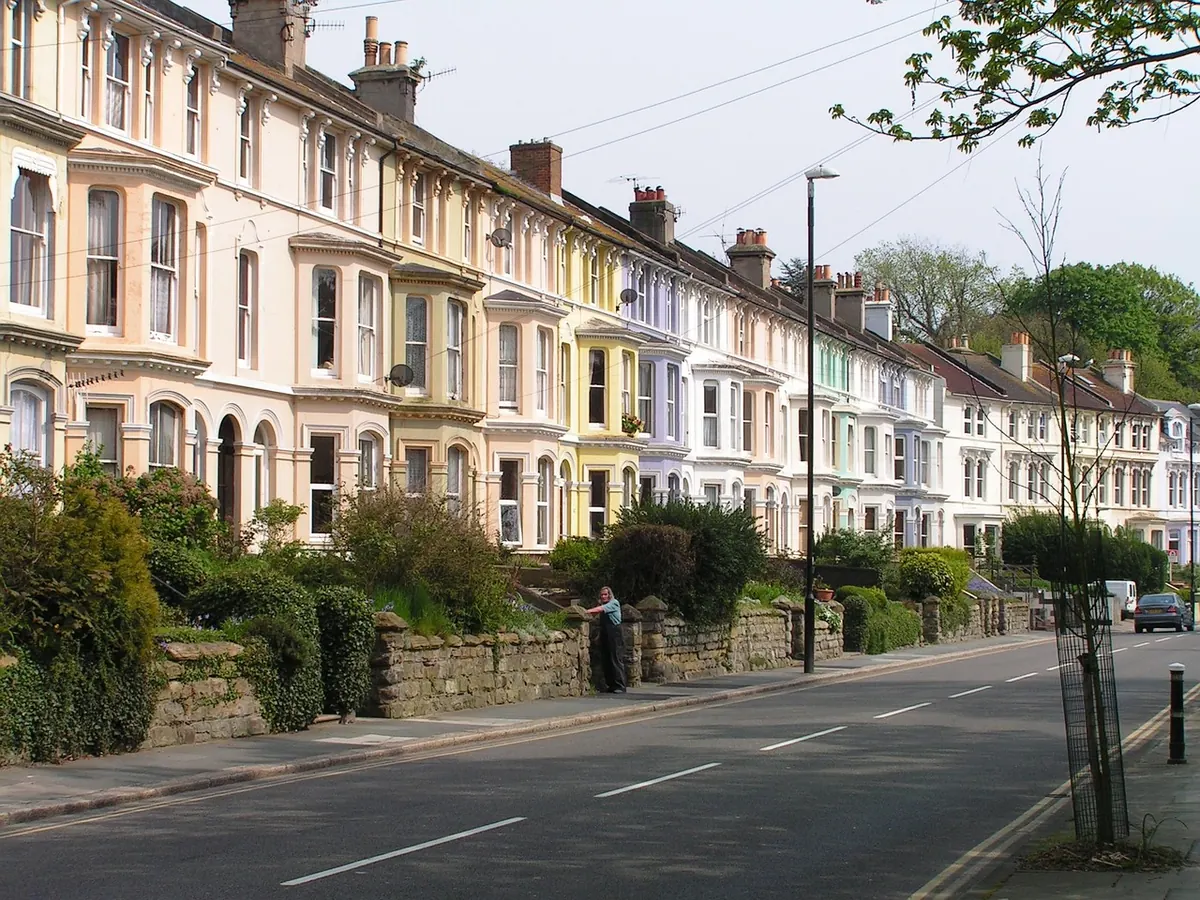
No listing tells you what a street feels like at seven in the morning. You can learn a fair amount from a laptop — crime figures, school catchments, flood maps — but the details that decide whether you'll be happy living somewhere are usually ordinary ones: the hum from a nearby A-road, whether the corner shop opens before your shift starts, how dark the walk from the bus stop is in January. Do the desk research first, then go and stand on the pavement at the right times.
Crime: what the figures can and can't tell you
Crime maps are a sensible starting point, and the police.uk data for your postcode area is free to browse. Read it with a little scepticism. The areas are small, so a single burglary on a street of thirty houses sends the numbers up sharply and can look alarming next to a neighbouring area with three times as many homes. Look at patterns over several months, and at the type of crime: a town centre with high street shoplifting has a very different feel from a quiet residential area with vehicle crime.
Reported crime isn't the same as actual crime, either. Some areas under-report. Walk the streets after dark if you can, and check the lighting, the alleyways, the gated passages behind terraces and how overlooked the pavements are. A short chat with a shopkeeper or a dog walker often tells you more than a graph.
Schools: catchments and the daily journey
If schools matter to you, start with admissions rather than league tables. Ofsted reports are worth reading in full instead of just the headline grade, and check the date — a school can change a great deal in three years. Your local authority usually publishes how far away the last child admitted lived in recent years, which is a far better guide than a map with a tidy circle drawn on it. Catchments shift, so living just inside an edge is no guarantee.
Visit at pick-up time. You'll see the traffic on the surrounding streets, hear how parents talk about the school and get a sense of the walk your child would make every day. For secondary schools, test the journey at the right hour — a school three miles away is a long trip if the bus runs once an hour.
Transport: test the journey you'll actually make
"Fifteen minutes to the station" means very little until you've walked it. Do it with a watch, in the rain, on the morning you'd normally travel. At the station, check how often trains run off-peak as well as at rush hour, the time of the last train home, and whether the line has a habit of weekend closures for engineering works.
Buses deserve a separate look. Check the timetable, then check it again for the evening, because plenty of routes stop running at seven. If you'll be driving, think about permit parking schemes, streets where commuters fill the spaces by eight, and the school-run traffic you'd meet every weekday. Noise counts too: flight paths, dual carriageways and railway lines are quiet on a Sunday viewing.
Flood risk and drainage
The Environment Agency's flood maps show the risk from rivers and the sea, and there is a separate map for surface water flooding — the sort that happens when heavy rain overwhelms drains, and which affects plenty of inland streets nowhere near a river. Check the postcode rather than the town, then look at the property itself: how high the ground floor sits above the road, whether the drainage gullies outside are clear, whether the garden slopes towards the house.
Ask about insurance before you fall in love with a house
Ask the vendor directly about any flooding, including in neighbours' homes. The standard property information form covers it, but a conversation tends to be more revealing. Then get an insurance quote before you commit, because flood risk can change premiums and excesses considerably and occasionally affects mortgage offers. For anything legal or financial, take proper advice from a conveyancer or surveyor rather than relying on maps alone.
Amenities: the things you'll use every week
Walk the local parade slowly. Is there a pharmacy, a post office, a supermarket big enough for a weekly shop? If you want to use the car less, these are the shops that save you a journey. Check whether the GP surgery is taking new patients and whether your address falls inside its boundary, and ask at a dental practice about waiting lists — some are long.
Then think about weekends. A park, a leisure centre, a library, a decent café, a playground for small children. Look at opening hours as well: a village shop that shuts at five suits some people and frustrates others. Useful extras include a cash machine, a parcel drop-off point and a bus that reaches the nearest hospital without two changes.
Visit at different times of day
A single viewing tells you about the house. Repeat visits tell you about the area. If you can, go at these times:
- Early weekday morning, around 7.30–8.30am. Traffic, the school run, parking, bin collections and how congested the roads out of the estate become.
- Mid-morning on a weekday. Quieter and more revealing: who is about, and whether the high street feels alive or half-shut.
- Late afternoon, 5–6.30pm. The commute home, the light, where people park, how the streets feel when everyone returns.
- Friday or Saturday evening. Noise from pubs and takeaways, street lighting, and how comfortable you feel walking back after dark.
- Sunday. What's open, whether the area feels deserted, and any church bells or sports clubs within earshot.
- After heavy rain, if you get the chance. Watch how quickly water clears from the road and whether any corners pool.
Then stand still for twenty minutes and listen. And talk to people — the person walking a dog, the shopkeeper, someone washing a car on their driveway. Ask what they would change about the area. You'll get honest answers, and occasionally a warning you would never have found online.
Before you commit
Gather everything you've learned and weigh it against how you actually live, not how you'd like to. If you work from home, a quiet street and reliable broadband matter more than a ten-minute walk to a station. If you drive everywhere, parking may outweigh a pretty high street.
A short final check:
- Write down your three non-negotiables and score each area against them.
- Revisit at a time you haven't tried yet, ideally a weekday evening or a wet morning.
- Confirm anything that affects your money, safety or schooling — flood cover, admissions criteria, nearby planning applications — with the relevant professional before you commit.
No area is perfect, and most compromises are fine once you know you're making them. The point of all this research is simply to make sure nothing takes you by surprise in the first month.
Photo: gerrit / Pixabay